Updated 26 Oct 2026
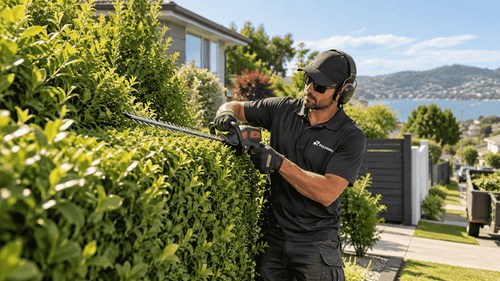
You've spent the weekend trimming hedges, pruning fruit trees or finally clearing that overgrown corner of the section. The garden looks great. The lawn, however, is now buried under branches, clippings, weeds and pulled-out shrubs.
Most of that pile can go as green waste, but not everything that comes out of a garden belongs in the same load. Soil, rocks, treated timber and plastic pots usually need separate disposal. Even familiar Kiwi plants like flax, cabbage trees and palm fronds can have different disposal requirements.
So, what can a garden waste removal service actually take, and what should you keep separate?
This guide covers what green waste collection services in New Zealand usually accept, which materials need special handling, what collection can cost, and how to arrange garden waste removal without unnecessary trips to the tip.
Good to know: Materials that can't go into standard green waste aren't necessarily a deal-breaker. Many removal specialists can collect mixed loads, provided they know what's included and can arrange disposal at facilities that accept each material.
Most garden waste removal services in NZ collect organic material left behind after mowing, trimming, pruning or clearing a garden. The main difference between a straightforward green waste collection and a more complicated job is often the size of the pile and what's mixed into it.
Grass clippings, fallen leaves and ordinary garden weeds are among the easiest materials to dispose of as green waste. They're generally accepted by composting and mulching facilities, provided they aren't contaminated with plastic, household rubbish or restricted plant material.
The problem is usually quantity. Mowing a large section, raking autumn leaves or clearing several garden beds can produce far more waste than your household green bin can accommodate. Leaving it piled up isn't ideal either, particularly when wet clippings begin to break down or loose leaves spread across the driveway.
For example, an Ezy Peazy customer in West Harbour, Auckland, had a full 2m³ green waste bag collected from their driveway for $120. The job was completed within six hours of being assigned.
If you're clearing ordinary weeds, they can usually go with the rest of your green waste. However, invasive or pest plants may require different disposal methods, which we'll cover further below.
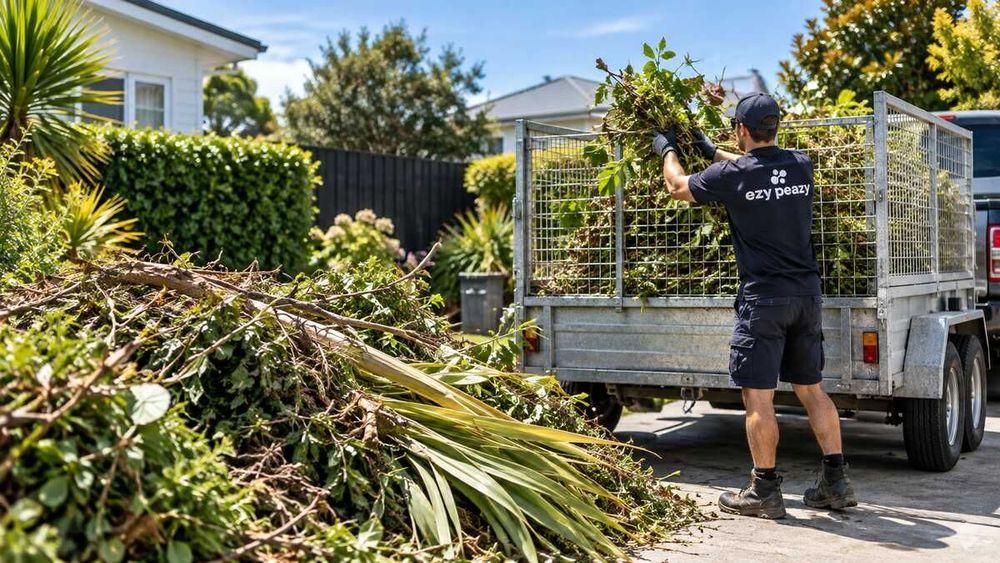
A hedge can look considerably smaller once it's trimmed, but the amount of waste left on the ground often tells a different story. Long branches, tangled clippings and woody stems take up more trailer space than you might expect, particularly after cutting back an overgrown boundary hedge.
The same applies to pruning fruit trees, removing dead branches or cutting back trees hanging over a driveway. Small branches, twigs and general pruning waste are usually accepted as green waste, while thicker branches may need to be cut into manageable lengths before transport.
In Remuera, Auckland, an Ezy Peazy customer arranged removal of weeping fig trimmings, including branches up to 60mm thick. The removal specialist brought a large caged trailer, cut the longer pieces to fit and completed the job in approximately two hours for $250.
When requesting a quote, mention the approximate size of your pile and the thickness of the largest branches. It helps the removal specialist decide whether they'll need a trailer, truck, cutting tools or additional loading help.
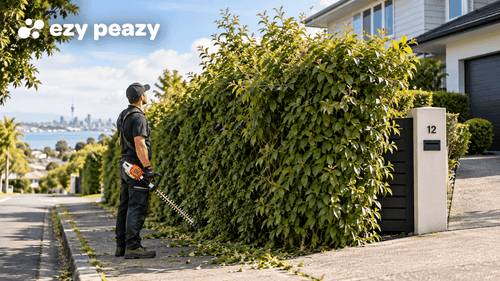
If the garden work itself isn't finished, you can also arrange hedge trimming services or tree pruning and trimming, and ask whether removing the cuttings can be included in the same job.
Clearing an old garden bed often produces more waste than expected. Once you start pulling out established shrubs, dead plants and tangled roots, what looked like a small tidy-up can quickly become a sizeable pile.
Most ordinary plant material can go with green waste, including leaves, stems, small roots and unwanted shrubs. The main complication is soil. Large root balls can hold a surprising amount of dirt, making them heavier to lift and unsuitable for some green waste facilities.
Stumps and thick woody roots may also need cutting or specialised equipment before they can be loaded. If you're removing established plants, let the removal specialist know whether they're already dug out or still need to be extracted.
Not everything found in a garden can be composted or turned into mulch. Green waste processing facilities generally need organic material free from contaminants such as treated timber, plastic, stones and household rubbish.
That doesn't mean you need to arrange separate collections for every item. It simply means the materials may need sorting and transporting to different disposal facilities.
A little soil attached to plant roots is usually unavoidable. Several bags of dirt from digging out a garden bed, however, are a different matter.
Soil is considerably heavier than leaves and branches, which affects loading, transport and disposal costs. Large quantities of soil, lifted turf containing significant amounts of dirt, rocks and gravel are generally unsuitable for standard green waste processing.
This often comes up during landscaping projects, lawn replacements and garden renovations. You might have a pile of branches and shrubs beside several bags of soil, broken edging stones or gravel from an old pathway.
Rather than mixing everything together, keep the heavier materials separate where practical. Mention the approximate quantities in your job description so the removal specialist can arrange appropriate disposal, which may involve an approved cleanfill or another facility.
Old raised garden beds, timber sleepers, fence posts and broken decking can easily end up in the same pile as branches and hedge trimmings. However, treated timber contains preservatives and shouldn't be composted with green waste or burned.
Plastic pots, seedling trays, hoses, weed matting and broken outdoor furniture also need separate disposal. These materials can contaminate composting loads and may attract different disposal charges.
Mixed garden rubbish is particularly common after a major backyard clean-up. In Claudelands, Hamilton, an Ezy Peazy customer needed green waste removed alongside an old dishwasher, timber and guttering. By showing everything in the job photos, the customer received five offers and had the load removed for $180, including labour, transport and disposal.
The important thing is to describe the entire load rather than simply calling it "garden waste". A removal specialist may be able to take everything in one visit, but they'll need to account for the different materials when quoting.
Some of the trickiest green waste in New Zealand comes from plants that are common in Kiwi gardens.
Flax, cabbage tree leaves, bamboo and palm fronds are particularly worth mentioning before collection. Their long, fibrous leaves can be difficult to shred and may become tangled in processing machinery. Some facilities accept them under specific conditions, while others refuse them or charge differently.
A trailer full of palm fronds, for example, may need different handling from the same volume of ordinary hedge clippings. The removal specialist needs to know what they're collecting before choosing a disposal facility.
In Rolleston, an Ezy Peazy customer had five established flax bushes removed, including their tough root plates, for $130. It's a good example of why describing the type of plant matters just as much as estimating the volume.
Pest plants and invasive weeds require even more care. Plants such as moth plant, wild ginger and tradescantia may be subject to regional pest management rules because seeds or plant fragments can spread when handled incorrectly.
Depending on the plant and local requirements, disposal may involve secure bagging, special handling or an approved landfill rather than an ordinary green waste facility. Check your regional council's pest plant guidance before arranging collection.
If you're unsure whether a plant can be composted, include a clear photo in your job description. For suitable everyday garden material, you can also explore our green waste composting tips before deciding what needs collecting.
Garden waste removal costs vary depending on the volume, type of material, property access and disposal requirements. A few bags of clippings stacked beside the driveway are usually quicker to collect than heavy branches scattered across a large section.
To give you an idea of what customers have actually paid, here are eight completed garden waste removal jobs arranged through Ezy Peazy.
These are final agreed prices from Ezy Peazy jobs completed between January and September 2026, not fixed service rates. The scope and inclusions varied between jobs.
The amount and type of waste usually make the biggest difference. A trailer full of dry leaves is much lighter than the same volume of wet branches, soil-covered roots or thick logs. Mixed loads containing timber, rubbish or restricted plant material may also cost more because of additional disposal requirements.
Access to the waste matters too. A pile stacked beside a driveway can be loaded relatively quickly, while branches at the back of a sloping section, behind a narrow gate or down several steps take more time and effort.
Collection timing and travel to suitable disposal facilities can also influence the quote. If you need everything cleared urgently or over a weekend, it's worth mentioning that upfront.
When comparing offers, check whether the price includes loading, transport and dump fees. That way, you're comparing the full cost of the job rather than just the collection charge.
For a more detailed breakdown, read our garden waste removal cost guide in NZ.
You don't need to spend hours tying every branch into bundles or calculating the exact cubic metres of your pile. A little preparation, however, can make collection easier and help removal specialists provide more accurate quotes.
Start by separating obvious non-green materials such as plastic pots, timber, stones and household rubbish. You don't need to sort every twig, but keeping different materials in identifiable piles makes it easier to assess what needs to go where.
Next, give an approximate idea of the quantity. Descriptions like "two trailer loads of hedge clippings", "six garden bags" or "branches from three small trees" are often more useful than guessing a weight. If you're unsure, photographs can help.
Access is another important detail. A pile beside the driveway is quite different from one behind a narrow side gate or at the bottom of a steep section. Mention any steps, long carrying distances, shared driveways or parking restrictions that could affect loading.
Finally, take two or three clear photos showing the whole pile, the types of material and any particularly thick branches or heavy roots.
A clear job description doesn't need to be complicated. It should explain what needs removing, roughly how much there is, where it's located and whether there are any access issues.
For example:
I've trimmed about 15 metres of overgrown hedge in Papatoetoe. There are roughly two trailer loads of branches and foliage stacked beside the driveway, with easy vehicle access. Looking for someone to load and remove everything, including dump fees.
Add your preferred collection date and photos, and local removal specialists can assess the job and make offers based on the work involved.
Not every garden clean-up needs a professional collection. If you've only got a couple of bags of leaves or grass clippings, your household green bin or a quick trip to the tip may be enough.
Larger projects are a different story. Wet branches can be heavy, hedge clippings are awkward to secure, and one trailer load often turns into two once you start loading. If you don't have a suitable vehicle, the cost and effort of hiring a trailer, loading everything and making several trips can add up.
Here's how the main options compare.
A skip bin can be practical when you're clearing a garden over several days and want somewhere to put the waste as you work. However, you'll usually need to load it yourself and make sure the contents meet the skip provider's restrictions.
A garden waste removal service is often more convenient when everything is already piled up and you want someone to handle the loading, transport and disposal.
For smaller loads or alternative ways to manage garden rubbish, explore our guide to garden waste disposal options in NZ.
You've already put the work into getting your garden looking good. The last thing you want is a pile of branches sitting beside the driveway for another week while you work out how to get rid of them.
Ezy Peazy helps you connect with local removal specialists who can take care of garden clear-outs, pruning waste, hedge clippings and mixed loads. Whether you've got a few bags to collect or a bigger backyard clean-up, you can describe the job and compare offers before deciding who to hire.
Free to post: Tell local service providers what needs removing, add photos and specify your preferred collection date without paying an upfront posting fee.
Compare multiple offers: Review prices, profiles, ratings and reviews from interested local providers to find an option that suits your needs and budget.
Flexible job requirements: From a straightforward green waste pickup to a larger mixed garden clean-up, explain what's involved so providers can quote for the work and disposal requirements.
Real completed-job examples: Browse previous Ezy Peazy jobs to get a better idea of what similar garden waste collections have involved and cost.
Whether it's the aftermath of a hedge trim, branches from a weekend of pruning or months of clippings you've been meaning to clear, there's no need to spend another weekend making trips to the tip.
Post your garden waste removal job on Ezy Peazy for free, add a few photos and compare offers from local removal specialists.
You did the gardening. We'll help you find someone to take care of the rest.

SEO and Content Strategist
Sakshi Partani is an SEO and Content Strategist at Ezy Peazy, creating practical guides that help Kiwis navigate everyday home and property jobs. She combines SEO expertise with research and real-world insights to deliver clear, useful content on services, costs, and finding the right help.