Updated 04 Aug 2026
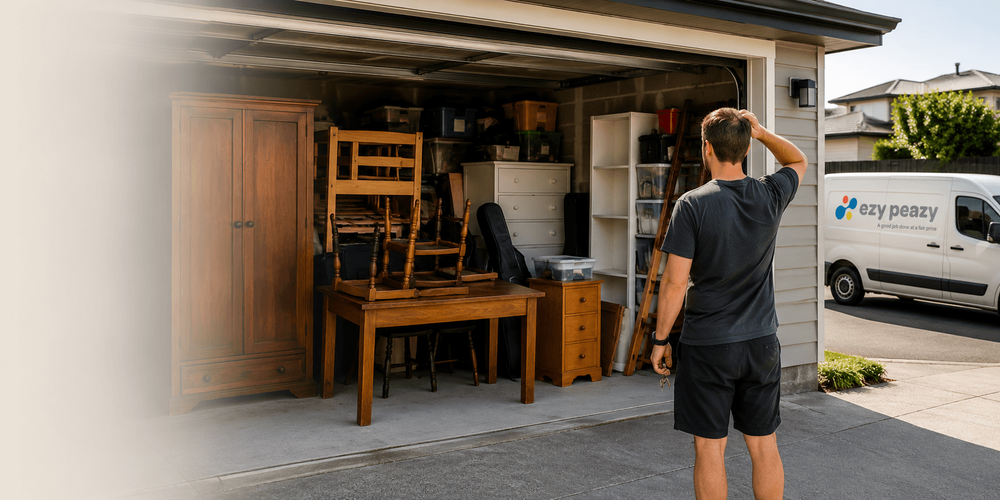
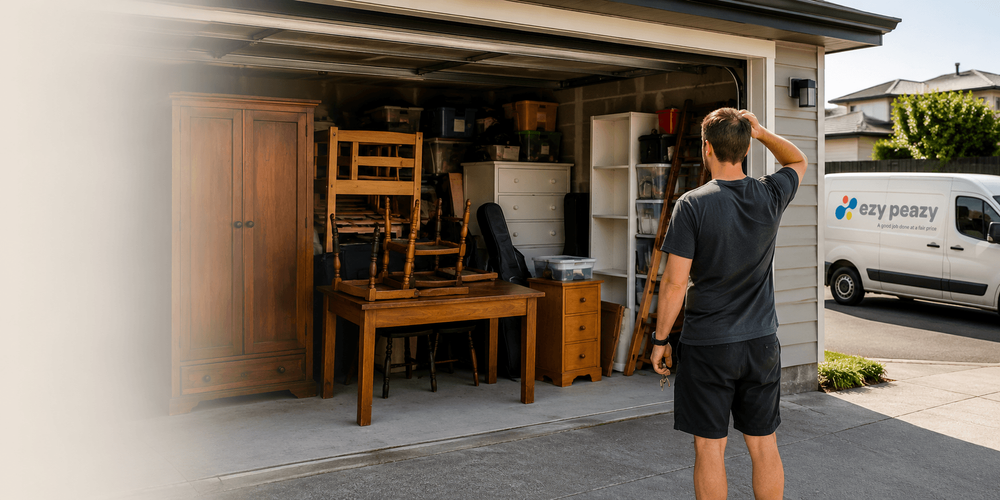
Somewhere in Aotearoa right now, there is old furniture quietly taking over the space it no longer deserves. The bunk bed that is no longer needed since the kids grew up and moved on. The wardrobe with the annoying door, moved into the garage during a reno. The dining table that wobbles, now buried under boxes in a garden shed. None of these is broken enough to require urgent removal, but it’s large enough to be annoying, so it stays.
All over NZ, old furniture turns garages, sheds, and spare rooms into holding bays for “we’ll sort this on the weekend” projects. It becomes part of the background until you want space for car parking, looking for the lost camping gear, or to set up a home office, and realise unwanted things fill half the space no one is ever gonna use.
This guide is here to solve the problem of that in-between category of clutter: the wardrobes, drawers, tables, chairs and mystery bookshelves that move around NZ homes long after they’ve stopped being useful. It’s a practical look at why old furniture stays, where it actually ends up, what junk removal services in New Zealand can cost, and what finally motivates people to clear it out.
Old furniture anywhere in NZ never leaves the house in the first move. It usually turns unwanted first and then stays in storage.
The dining table is upgraded, but the old one remains in the garage “for now”. A bunk bed was dismantled to make room for a home office setup, but the boxes remain in a corner of the garage. A wardrobe that no longer fits in your room somehow ends up in the shed. None of these moves is considered final when they happen. They’re small compromises that created big stack-ups.
Furniture lingers around the house because the decision to remove it feels like an awkward question. There are too many maybes associated with it: “maybe we will need it later”, “maybe in case of emergency”, “maybe some relative will use it”, and more “maybes”.
Also, if it’s still technically functional, throwing it feels wasteful. And because most furniture removal jobs involve lifting, vehicle space, and a bit of coordination, the whole thing gets pushed to the back of more immediate life admin.
The first time, an old bunk bed frame or dodgy wardrobe doesn’t look problematic. But furniture that overstayed its shelf life usually costs more than people realise.
When Kiwis actually decide the furniture has to move, it usually goes in one of a few places. The right option depends less on good intentions and more on condition, effort and logistics.
If the piece is genuinely reusable, donation and op shops are better options. If it’s damp, wobbly, chipped or structurally tired, it usually needs a different exit route.
Furniture which still has some life left can be sold on Trade Me and Facebook Marketplace. New Zealand has a strong free-to-collect culture, and decent items can be sold quickly if the photos are clear and the pickup is easy.
But online handovers come with their own quirks. Buyers change plans, misunderstand the size of what they purchase, or simply stop replying. A “quick pickup this weekend” can turn into a couple of weeks of back-and-forth, especially if the furniture is awkward to move or doesn’t suit mainstream tastes.
For one furniture item, this is still worth it. But for the whole pile up around the house, it can become its own project.
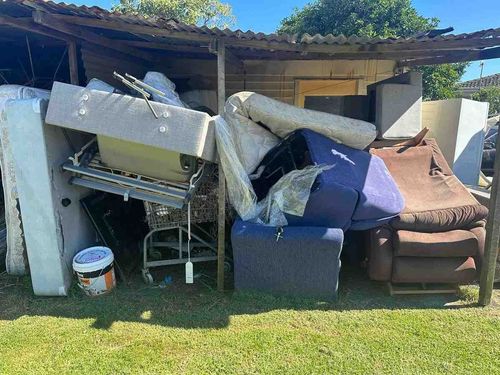
Taking completely done furniture to the tip is a clear choice. Most transfer stations will take bulky items, and some materials can be separated for recycling depending on local rules and how the furniture is built.
The challenge is rarely the rules. It’s the commute.
You need a large vehicle or trailer, enough hands to load and unload safely, and the patience for queues, weighbridges or multiple runs. A single chair or bedside table is one thing. A garage full of mixed furniture is something else entirely.
This is where the actual difference between “possible” and “easy” shows up. Plenty of jobs are okay for DIY. That doesn’t mean they’re the best use of a weekend.
Once it becomes more than one piece of furniture and a whole pile-up, professional junk removal starts to make a lot more sense. Especially when the furniture is bulky, access is limited, or the goal is to clear an entire area rather than move one piece at a time.
This is how a lot of junk and furniture jobs actually take place. It’s very rare for someone to hire a professional junk removalist just for one chair. More often, it’s a cluster of things that have built up around each other: an old bed frame, a worn table, two chairs, a cabinet that stopped being useful years ago.
That shift matters. It turns the task from “how do I get rid of this?” into “how do I hire a local furniture removal service?” When that’s the goal, local removal help on Ezy Peazy is often less about convenience and more about momentum.
The one question that makes posting a furniture removal think twice is cost. Fair enough because old furniture removal sounds simple until you realise price depends on more than just the item itself.
Across New Zealand, the biggest pricing factors are volume and access. A small pickup, like a chair or bedside table, costs the lower end of the scale. Once you’re talking big items such as wardrobes, tables, bed frames, multiple items, stairs, apartment lifts or long carries from the house to the vehicle, the price goes up fast. According to Ezy Peazy NZ pricing guides and service pages, jobs often start around $80 and climb into the several-hundred-dollar range for larger loads or trickier access.
Here’s a rough guide to what furniture removal can look like in practice:
These aren’t fixed rates; these come from past completed jobs on Ezy Peazy. However, you can find accurate costs just by posting your job details on Ezy Peazy, and multiple local taskers will send you quotes to compare and choose from.
A few things usually affect the final price:
If you want to know more about how removal pricing works across different item types, you can find it right here in the NZ junk removal costs guide.
Old furniture removal is not something that people plan to do every weekend. Something changes, and the furniture stops being easy to ignore.
Moving or renovating houses are the biggest triggers. Once you’re paying to pack, load, and transport everything, furniture that was kept for “maybe useful one day” scenarios becomes more like dead weight.
Other reasons, such as the need for new furniture for the kids' room, creating a peaceful space for a home office, or needing more space for a new car, all require the junk furniture to be removed and the space freed up.
And lastly, maybe you are just done with it. They’ve shuffled around the same bed frame for the last time. They can’t get to the back of the garage without moving a dead bookshelf and two random dining chairs. They want the space back more than they want to keep pretending they’ll sort it later.
That’s also when the scale of the job becomes clearer. A lot of furniture removal and rubbish removal jobs in Christchurch, Wellington and Auckland are not one-item pickups but grouped clear-outs because the household has finally decided to reclaim the whole area, not just chip away at it.
Old furniture is part of how homes grow. It arrives for one stage of life and often overstays into the next. The real question isn’t whether it once had value. It’s whether it’s still worth the space it takes up now.
If your garage, shed or spare room has quietly become storage for half-retired wardrobes, tables, drawers and bed frames, there’s a good chance the problem is no longer the furniture itself. It’s the delay. It’s the effort of working around it. It’s the way an ordinary household job turns into a lingering, low-grade frustration.
So you’re ready to clear it properly; Ezy Peazy’s junk removal services make it easy to find local help without turning the whole thing into another project. Whether you’re booking junk removal in Wellington, arranging a bigger clean-out in Christchurch, or simply trying to get old furniture out of the house in one visit, the point is the same: stop stepping around it, and get the space back.
About Ezy Peazy
Ezy Peazy is a platform connecting Kiwis across New Zealand with skilled taskers for everything from household repairs and cleaning to removals and deliveries. Operating since 2021, the platform helps people put their skills to work while giving everyday Kiwis trusted, affordable, and reliable support. With transparent reviews, competitive pricing, and a straightforward booking flow, Ezy Peazy is making it simple to get jobs like handyman repairs, flat-pack assembly, and small maintenance tasks done properly.

SEO and Content Strategist
Sakshi Partani is an SEO and Content Strategist at Ezy Peazy, creating practical guides that help Kiwis navigate everyday home and property jobs. She combines SEO expertise with research and real-world insights to deliver clear, useful content on services, costs, and finding the right help.