Updated 17 Sep 2026
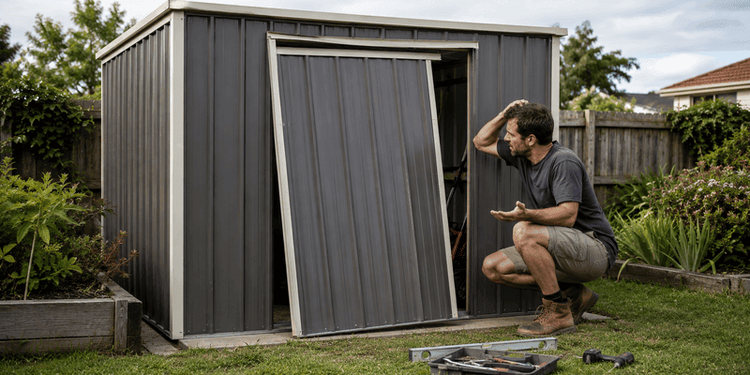
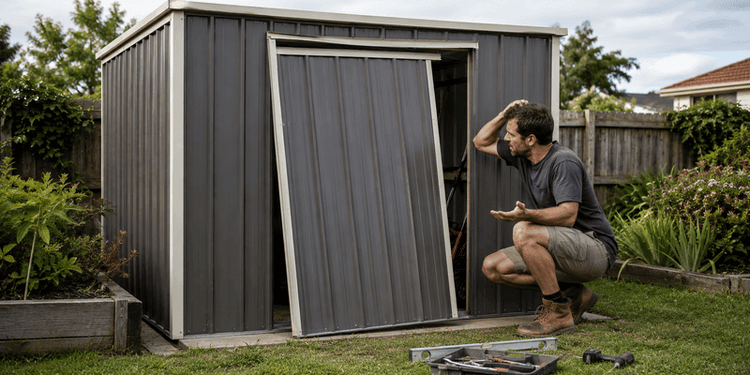
Right after the assembly, the shed door closed properly. Three months on, every time you want to grab a mower, you have to lean into it, or the sliding panel has jumped the track and won’t run straight, no matter how many times you try to realign it.
This is one of the most common problems Kiwis face with flatpack shed assembly. Search any local DIY forum, and you will find the pattern: a shed is purchased from Bunnings, Mitre 10, or The Warehouse, assembled over a weekend, and within a couple of months, the door is sticking, dragging, gapping, or refusing to close altogether.
What most forum advice misses is that the fix isn’t always DIY, and getting it wrong twice costs more than getting it right once.
In this guide, we will discuss everything from what the issue is, how it is different from other regions, shed type, and door type, and how to tell if you need a quick DIY fix or a local garden shed assembler from Ezy Peazy, to what each option is likely to cost.
The only part that moves in the whole structure is the door, and it fits on the one section of the frame that has to remain perfectly square. That’s why it’s usually the sign that something has gone wrong either during DIY or beneath the shed entirely.
The most common cause is if the concrete pad, timber floor, or paver base is even slightly unlevel, maybe because it wasn’t double-checked, or because the ground beneath it has shifted since. The entire frame twists to compensate.
Even a 5mm imbalance in one corner is enough to throw the door frame out of order, resulting in a door that binds at the top, drags at the bottom, or won’t run as it’s supposed to on its track.
It's easy to assume the job's on track when the walls are up, and the roof is going on. But the shed door is usually the first place where small assembly errors become obvious. A frame that's only slightly out of square can leave the door rubbing, sticking, or refusing to latch properly.
Fixing it afterwards often means undoing work you've already finished, which is never ideal. Spending a few extra minutes checking the frame before securing everything can save a lot of hassle later.
Timber sheds are built to handle the outdoors, but they're still affected by New Zealand's constantly changing weather. A door that closed perfectly in summer might start catching after weeks of wet weather, especially in coastal or high-rainfall areas.
This doesn't always mean the shed was assembled incorrectly; it's often just the timber reacting to moisture. Regular maintenance, such as resealing exposed timber and improving ventilation, helps keep seasonal movement to a minimum and extends the life of the shed.
Like anything that's used day in and day out, shed hinges don't stay perfectly aligned forever. A bit of movement over the years is completely normal, particularly if the shed sits on uneven ground or is exposed to strong winds.
If the door has gradually become harder to close, the hinges are often the first place to check. A simple adjustment can usually have the door swinging smoothly again without replacing the entire door or frame.
Popular garden shed brands in NZ such as Garden Master, Galvo, Storite, and similar) Use sliding doors on a track rather than hinges; however, if any of these fail, it requires a different fix.
Hinged doors are most common for wooden sheds and smaller steel or plastic sheds. If these are misaligned, they would need to be dragged, gapped, or forced to latch. However, these issues can be avoided just by checking the frame twice before it’s assembled, and that’s why expert garden shed assembly help in Auckland from Ezy Peazy includes this as a basic.
Sliding doors are the most common part of big steel sheds, and the most common issues with them are that they won’t run smoothly, jump the track, don’t sit flush, or grind. The common causes for these issues are a bent track or worn glider, more than a squareness issue. However, since the track is fixed to the frame, an unlevel base still causes it to bind at one end.
In case of DIY shed assembly, it gets hard to align the track correctly the first time, and that is why an experienced assembler who’s assembled this exact shed model before has a real edge.
These are the kind of details that a professional who has dealt with these brands knows because a generic manual does not have this. That is why it is suggested to hire an assembler through Ezy Peazy’s garden shed assembly service in Christchurch.
A basic diagnostic technique: measure diagonally, corner to corner, both ways across the door opening. If both of these measurements do not match, the frame or base isn’t square, so that’s the actual problem, not the door.
If you are part of the second group, shimming the door only treats the symptoms; to get it right this time, the shed needs to be levelled, and that’s exactly the kind of job worth getting a quote for from a local garden shed assembler in Wellington rather than repeating the same DIY fix every few months.
The one thing you would find common here is that the cost of professional assembly help in first-time or re-assembly later is the same. However, the difference is that re-assembly does not include the cost of time, energy, and money you invested while DIYing it for the first time. For a fuller cost breakdown by shed size and site condition, see our shed assembly cost guide.
Most NZ shed brands and manufacturers provide warranties on materials and components such as steel, timber, and hardware, rather than the assembly itself. A door issue caused by incorrect assembly usually isn’t treated as a manufacturer's defect.
Some suppliers’ warranty conditions clearly mention that the shed is to be assembled on a flat, prepared site per the instructions, meaning a claim could be denied if the base wasn’t level to begin with.
Hiring a professional assembler in Hamilton on Ezy Peazy can help you get the job documented properly and is a simple way to remove that ambiguity entirely.
NZ has a diverse geography, and ground conditions vary across different regions. This can affect whether a shed base stays level over time.
For example, Auckland and Northland have more expansive clay soils that tend to seasonally shrink-swell, while the West Coast and Waikato deal more with drainage problems because of heavy rains than with soil type. Also, parts of the South Island see occasional frost heave because of harsh winters.
None of this means every door problem is an entirely soil problem; most still come back to wrong assembly, but it’s exactly the kind of local, on-the-ground knowledge a tasker who assembles sheds regularly in Tauranga or any other part of NZ is more likely to know than a generic instruction booklet ever will.
Almost every shed-door problem, whether it is hinged or sliding, steel, wood, or plastic, comes back to a base that wasn’t level, a frame that wasn’t squared, or ground conditions a first-time DIYer had no way of knowing. All three are the kind of problems a professional assembler would catch before the assembly begins.
So, whether you’re ready to assemble a new shed or need to fix the old one, garden shed assembly help on Ezy Peazy is worth checking out. Most listings come with a guarantee: if something isn’t right, the tasker comes back and fixes it at no extra charge.
About Ezy Peazy
Ezy Peazy is a platform connecting Kiwis across New Zealand with skilled taskers for everything from household repairs and cleaning to removals and deliveries. Operating since 2021, the platform helps people put their skills to work while giving everyday Kiwis trusted, affordable, and reliable support. With transparent reviews, competitive pricing, and a straightforward booking flow, Ezy Peazy is making it simple to get jobs like handyman repairs, flat-pack assembly, and small maintenance tasks done properly.

Founder, Ezy Peazy
Sumit Sharma is the Founder and CEO of Ezy Peazy, with first-hand experience in New Zealand’s home services and local tasking industry. He writes about home services, local trades, pricing, and how Kiwis find reliable help, drawing on his experience building and running Ezy Peazy.